What This Week Reveals About South Australia’s Future: A War, A Price Spike and Six Questions Worth Asking.
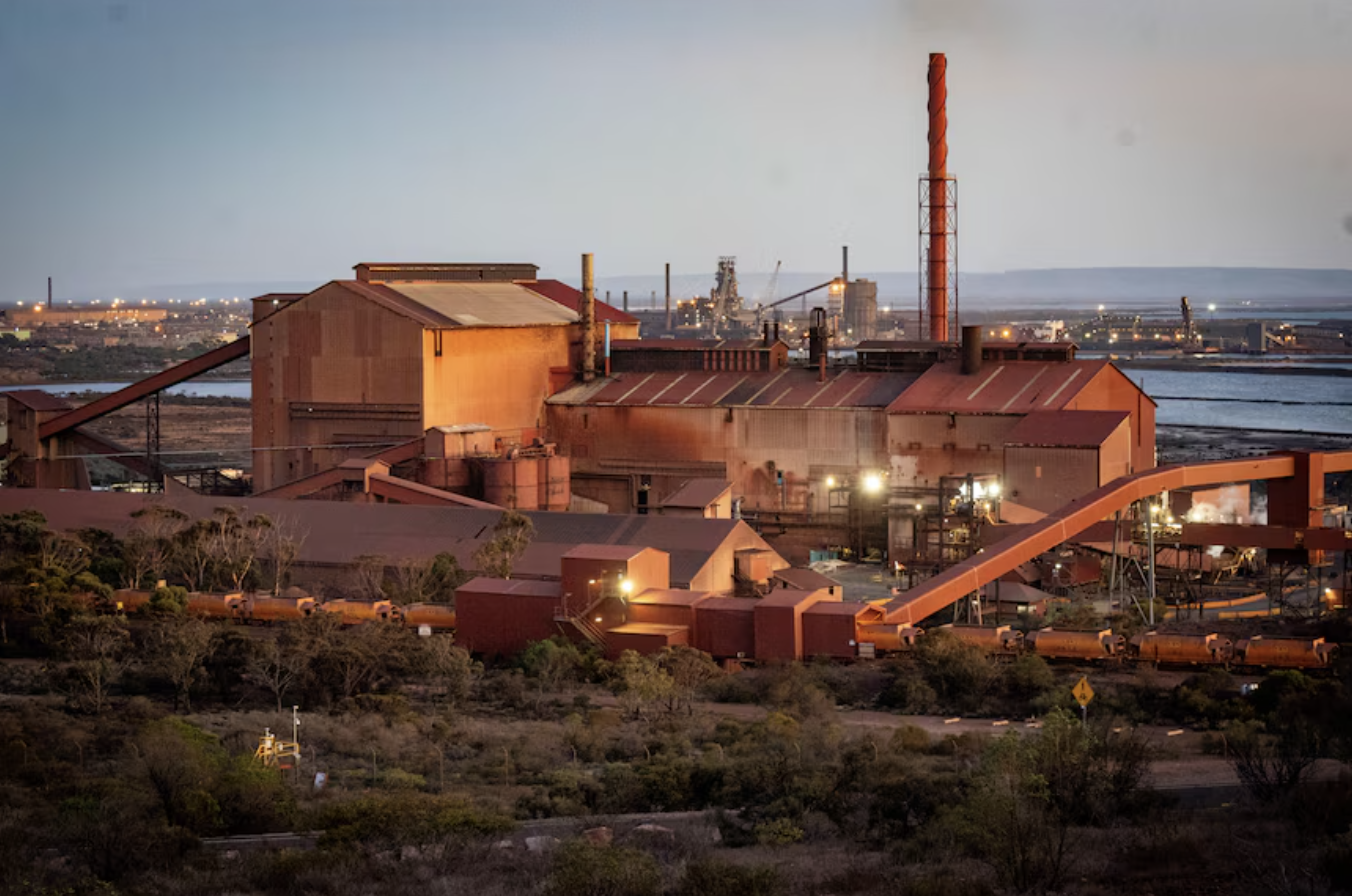
Words by Professor Ariella Helfgott. Image by Grant Cumming (ABC News).
A war broke out this week between the US, Israel, and Iran.
Within two days, global gas prices spiked 50%. The world's largest gas export facility in Qatar shut down. Ships carrying a fifth of the world's oil stopped moving.
We don't know how this ends. Nobody does. It could resolve in weeks. It could get worse. It could become a new normal.
What we can do, and what foresight is for, is look at what just happened, think honestly about what it reveals, and ask which choices would serve South Australia well across a range of possible futures. Not predicting. Preparing.
Here's what we see.
We haven't felt it here yet. But it's coming. Petrol prices will rise over the next fortnight. Gas bills are likely to follow.
If you've got solar panels and a battery at home, your electricity won't be affected. Our SA sun doesn't care about the Strait of Hormuz.
If you don't - and many South Australians don't, especially renters, people in social housing, people who haven't been able to afford them - this will hit your budget the way these things always do.
This is the third time in four years a crisis on the other side of the world has spiked our energy prices. Russia. Iran. Now Iran again. Same pattern.
Where does your energy come from? And can anyone take it away from you?
That's not a political question. It's a household question. And it's the kind of question that foresight exists to help us think through, not after a crisis, but before the next one.
If you have family or loved ones in Iran, Israel, or anywhere across the Gulf, if you're watching this crisis not as a news story but as a fear you carry in your body, we hold you in our hearts, in solidarity with the human suffering on all sides. We're about to talk about petrol prices and gas markets, because those things are coming for South Australian businesses and households and because this moment raises real questions about the choices ahead of us as a state. The most important thing at stake in any war is people's lives. We wish for peace for everyone.
What South Australia Quietly Built
One of the things foresight teaches you is to notice what's already working, especially when it's become so normal that people forget how remarkable it is.
South Australians don't always realise how unusual we are.
Over 70% of our electricity comes from renewables. Last year, renewables met the whole state's electricity demand for part of every day on 299 out of 365 days. More than half our homes have rooftop solar, more than anywhere else on Earth. We built some of the first big batteries. We solved grid problems other places haven't even encountered yet.
This happened across multiple governments. It happened because hundreds of thousands of households made a decision. And it happened because some people had the courage to do things that some others said wouldn't work.
Those decisions, made years ago, often under uncertainty, are the reason a big part of our electricity system now runs on energy that nobody overseas can switch off or price up.
That's the thing about good decisions under uncertainty: you often don't see the payoff until a crisis arrives that you didn't predict. This week is one of those moments.
Where We Are Still Exposed
Electricity is only part of the picture.
Any part of our economy that still runs on fossil fuels is exposed to exactly this kind of shock. Transport - every litre of petrol and diesel is imported. Heavy industry. Freight. Agriculture. Mining. If it burns diesel or gas, its costs just became hostage to a war 11,000 kilometres away.
Petrol prices will rise. It takes about seven to ten days for global spikes to reach Australian bowsers. Expect 10 to 25 cents more per litre over the coming fortnight. That hits everyone who drives, everyone who buys food that was trucked to the shop, every farmer running machinery, every business running a fleet.
This is why alternative fuels including hydrogen matter for industry - not as an environmental position, but for the same reason rooftop solar matters for households. They're the path to the kind of independence our electricity system already has. Anything we haven't made independent yet is vulnerable. This week is proof.
And here's something worth knowing about our own fossil fuel resources. South Australia's Cooper Basin is Australia's most important onshore oil and gas basin. Santos, headquartered right here in Adelaide, is the biggest producer, alongside Beach Energy and a number of smaller companies. SA also has gas interests in the Otway Basin near the Victorian border.
These are our resources, under our ground. But the way the gas market works, they get priced at international rates. So, when a war spikes global prices, every producer operating in SA makes windfall profits. SA households and businesses pay more for the same gas and oil we produced.
Nobody designed this to be unfair. But this week makes it very hard to ignore.
In a world this uncertain, keeping doors open is a good strategy.
Keeping Doors Open In Whyalla
In foresight, one of the most important principles is optionality: making choices today that keep as many doors open as possible for tomorrow, especially when you can't be sure what's coming.
The SA Government recently signed a deal for Cooper Basin gas to power the Whyalla steelworks transformation. It keeps jobs. It cuts emissions by about half. That's genuinely important for that community.
It also ties our biggest industrial project to a fuel whose price just jumped 50% because of a war 12,000 kilometres away. That doesn't mean the deal is wrong. It means it's worth asking about optionality.In Oman, they're building a steel plant designed to be ready for green hydrogen from day one. In Sweden, they've already made steel without fossil fuels. The buyers who'll pay a premium for green steel are the same European companies now scrambling to pay their energy bills. They're going to get pickier about where their steel comes from. Quickly.
The final terms of the Whyalla deal aren't locked in until June. That's a practical window to ask whether everything built under this deal could be designed so it can switch to hydrogen later without an expensive rebuild. That wouldn't undo the deal. It would just keep the door open. And building flexibility in now costs a lot less than retrofitting later.
Three Possible Futures, and What They Have In Common
We can't predict how this crisis unfolds. But we can think about the range of possibilities and ask what serves South Australia well across all of them.
If this blows over quickly and fossil fuel markets stabilise: there's a risk of complacency, assuming gas will stay cheap, deferring the harder work, treating our electricity achievement as the finish line rather than a foundation.
If the global energy transitions accelerate driven by this crisis and the ones before it: South Australia is extraordinarily well-positioned. But position alone doesn't capture opportunity. Green hydrogen, green steel, critical mineral processing, battery manufacturing, these markets are being created right now. First movers will capture them. Every month of hesitation is a month that Oman, Chile, Namibia, and others use to build what we could build.
If the world enters a longer period of energy volatility: our renewable electricity system provides genuine resilience for many households. But our transport, industry, and agriculture remain exposed. Regional communities dependent on diesel, industries dependent on gas, supply chains dependent on stable global shipping are all vulnerable. The question becomes: does the floor hold for everyone, or just for households with solar?
Here's what's interesting: across all three futures, many of the same actions make sense. In foresight, we call these "robust strategies", choices that serve you well regardless of which future actually arrives. They're worth paying attention to.
There's also a common misconception worth naming. The default story about the energy transition is that it's slow, expensive, and something we have to endure.
People who've spent their careers studying energy shifts - including our colleagues who ran scenario planning inside the world's biggest energy companies - describe something quite different. They see transitions as moments where opportunity opens up fast for the places that move first. Not a slow grind. A series of tipping points. The question isn't whether the transition happens. It's who's in position when it does.
What Energy Sovereignty Actually Means
Energy sovereignty means no war, no cartel, and no corporate balance sheet determines whether you can afford to heat your home or fill your car.
A grandmother in Elizabeth keeping cool during a heatwave without dreading the bill. A farmer in the Mid North whose costs don't spike every time there's a crisis overseas. A family in Whyalla whose jobs are secure not just for this contract but for their kids. A young couple who aren't sending $50 a week overseas for petrol.
That's not left or right. Most South Australians would just call it common sense.
Six Provocations Worth Thinking About
These aren't predictions or recommendations. They're the kind of questions that foresight is designed to surface: possibilities that seem worth exploring because they hold up across different futures. We offer them as starting points for conversation.The conversations themselves matter more than any single idea here.
1. What if we kept some of the value from our own resources?Right now, this is what happens when a crisis like this week's hits. Global fossil fuel prices spike. Companies producing gas and oil from SA's Cooper Basin - Santos, Beach Energy, and others - make windfall profits, because their product just became much more valuable overnight. At the same time, SA households and businesses pay more for petrol, for gas, and for everything that gets trucked or manufactured using fossil fuels. The profits flow to shareholders. The costs flow to families.
This is happening nationally too. Australia's petroleum resource rent tax currently raises less revenue than beer taxes - a fact that is, this week, the subject of a Senate inquiry. Meanwhile, Norway, a country with a population not that dissimilar to South Australia, used its oil and gas revenues to build a sovereign wealth fund now worth over US$1.9 trillion. That's roughly $340,000 for every Norwegian citizen. The fund generates more income for Norway than oil and gas production itself. It was built by one simple decision: the wealth from finite resources under Norwegian ground should benefit Norwegian people, not just the companies extracting them.
What would it look like if South Australia made a similar decision, at state level, with our own resources? Not a permanent tax on producers. A windfall mechanism that only activates when global prices spike well above the long-term average, exactly the kind of week we're having right now. The revenue could go into a sovereign energy fund that invests in the things that make us less exposed next time: battery storage, transport electrification, hydrogen and alternative fuel development, and direct energy hardship relief for the households that get hit hardest.
The fossil fuel resources under South Australia's ground are finite. They won't last forever. The question is whether, when they're gone, we'll have something to show for them, or whether the value will have flowed elsewhere while we paid the price spikes.
2. Could we keep the hydrogen door open at Whyalla?The window before June is a practical opportunity. If all new infrastructure were designed to be hydrogen-compatible from the start, it wouldn't undo the gas deal, it would just preserve options. Building that flexibility in now costs a fraction of what retrofitting later would cost. Worth exploring.
3. What would it take to make every sector as independent as our electricity?We've proven it works for electricity. The question is how to extend that independence to transport, industry, agriculture, everywhere we're still sending money overseas for fuel and getting price-shocked in return. Electric vehicles for passenger and commercial fleets. Hydrogen and alternative fuels for heavy industry and freight. Could government fleets lead the way? Could charging and refuelling infrastructure be built ahead of demand rather than behind it? And might incentives for commercial vehicles, freight, agriculture, mining, come first, since those sectors are most exposed to fuel shocks and most visible in regional communities?
4. What if we built industries, not just mines?We have world-class minerals. But digging things up and shipping them overseas isn't sovereignty, it's just extraction. The difference between shipping copper concentrate to China and manufacturing copper wire here is the difference between being a quarry and being an industrial economy. In a world where supply chains are fragmenting and countries need reliable partners, SA's combination of stable governance, clean energy, and critical minerals is a genuinely strong hand. How might we play it?
5. How do we make sure the floor holds? Most people aren't thinking about energy policy. They're getting dinner on the table, keeping the bills manageable, keeping the car running. The energy transition has to work for those people, not as a grand project they're being enrolled in, but as something that makes daily life more stable and less anxious.
What would it look like if solar and batteries reached social housing and low-income households as a priority? If energy hardship provisions kicked in automatically when prices spike, no applications, no forms, no hoops? If remote communities had off-grid renewable systems? A decent energy system absorbs complexity so ordinary people don't have to.
6. What would community owned energy look like if it worked across SA? Community energy in Australia has a long history of good intentions that haven't scaled. Pilot projects that depend on grants. Volunteer boards that burn out. Regulatory complexity that defeats communities before they begin. We should be honest about that.
It doesn't fail because communities lack ambition. It fails because the gap between ambition and execution is full of complexity that no volunteer group can manage alone.
What if instead of another grants program, there were a permanent enabling body, like a HomeStart for community energy, that handled the template legal structures, grid connections, financial modelling, and insurance so every community didn't have to start from scratch? What if instead of grants that run out, there were a revolving loan facility where communities borrowed against future energy revenue, the assets paid for themselves, and the community built real wealth over time?
These approaches have worked elsewhere. Across Denmark, Germany, Scotland, and parts of Spain and Argentina, community energy isn't a pilot, it's a normal part of how energy works. The common thread isn't ideology. It's infrastructure. Every country where community energy works at scale has built the enabling architecture, the legal templates, the financing pathways, the grid access rules, so that communities don't have to reinvent the wheel every time. That's the piece Australia has never built. It could.
SA Futures Agency is currently developing a set of energy futures scenarios for South Australia that explore these questions and many more, in all directions. They draw on work we've done over the past year with the SA Future Energy ecosystem, international scenario practitioners including Jeremy Bentham, and conversations with South Australians across the state. The scenarios won't predict what happens. They'll help us explore what our futures could look like depending on what we do and don't do, under conditions we can't control. Which decisions would we regret most? Which would leave us more prosperous, more secure, more independent? We'll share them when they're ready soon, and we'll want your help stress-testing them.
Where This Leaves Us
South Australia already did the hardest thing. We built a renewable electricity system that people around the world genuinely admire. We did it across political lines, against scepticism, against the repeated assurance that it couldn't be done.
The question now, and it's a genuine question, not a rhetorical one, is whether we build on that or stop there.
We can't know what's coming. That's the honest starting point of all foresight work. But we can notice patterns. We can see that the world is reorganising around energy, that the places which control their own will be more stable and more prosperous, and the places that depend on fuels shipped through straits they can't secure will feel every shock.
We've seen this pattern three times in four years.
We can also see what South Australia has. The sun. The wind. The minerals. The grid. The knowledge. The track record.
This week didn't create the opportunity. But it made it very hard to look away from.
We don't have the answers. But we think these are conversations worth having, and worth having now, together, across all sides. We'd love to hear what you think.
A Note About How We Talk To Each Other
South Australia heads to an election soon. The questions in this briefing, about energy, about industry, about who benefits and who pays, will be part of that conversation. They should be.
But how we have that conversation matters as much as what we decide.
Nobody has the full picture alone. Not us, not government, not industry, not any single community. The challenges we're facing across energy, cost of living, what kind of economy we build, are genuinely complex. No one person or group holds all the knowledge to navigate them alone. That's not a weakness. It's just how complex systems work. The best decisions come from people who are willing to listen to perspectives different from their own, not because it's polite, but because the person who sees things differently from you might be seeing something you can't.
Cost-of-living stress is already high. If it gets worse, the people who'll struggle most are the ones already struggling - people on fixed incomes, in regional communities, on tight margins. South Australia has always been good at looking after its own. That's going to matter.
And the South Australians watching this crisis with a fear most of us will never fully understand - Iranian-Australians, and families with loved ones across the Gulf and the broader region - they are our colleagues, our neighbours, our kids' classmates' parents. Crises like this can strain community bonds or strengthen them. That's a choice, and it's ours.
We have an opportunity in this election to talk honestly about our future in a way that brings people together rather than divides them. To approach each other with humility, knowing that none of us has all the answers. To listen across difference, not as a courtesy, but because that's where the insights we're missing actually live. South Australia is a small enough place that we can do this. And a good enough place that we should.
A Final Thought
The most resilient households and communities are the ones that can do two things at the same time: face the full reality of what might go wrong, and stay committed to building something better. That’s not optimism. It’s not pessimism. It’s the discipline of refusing to choose between honesty and hope.
We wrote this briefing because we believe every South Australian deserves the tools to understand what’s happening and make good decisions for their family, their and community, their state. You don’t need a degree in international relations. You don’t need to follow the news 24/7. You just need to lay out the possibilities clearly, figure out what to watch for, and remind yourself that you’re not powerless.
That principle doesn’t belong to any political party. It belongs to all of us.